Why Cape Town Is Different
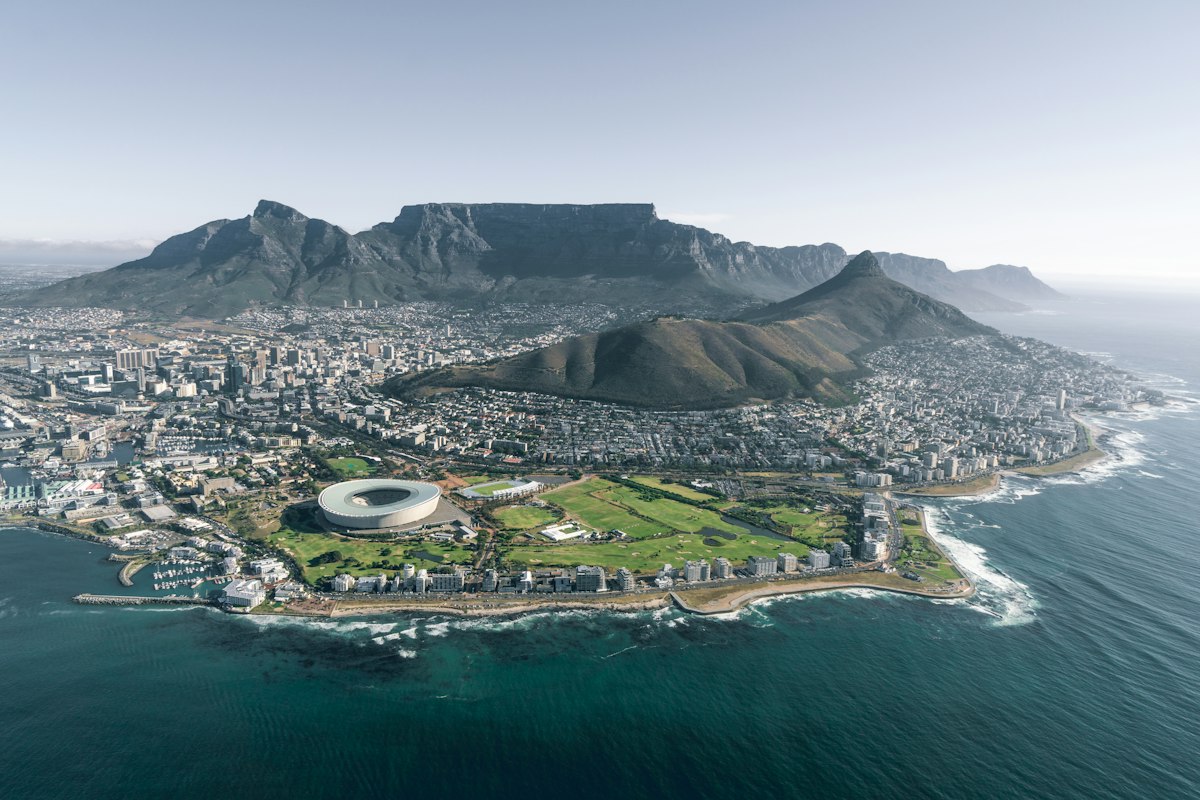
Cape Town is the kind of place that people visit and immediately start planning how to return. It combines landscapes that feel lifted from multiple continents — the flat-topped mountain that dominates the city, the Atlantic and Indian Ocean coastlines, the wine valleys of the Winelands, the fynbos wilderness of the Cape — with a food and culture scene that's become one of the most interesting in Africa. The light here is extraordinary. The geography is extraordinary. The wine is extraordinary. Most visitors underestimate how much there is to do.
Table Mountain
The cable car to the summit is the single most important thing to do in Cape Town — but it's weather-dependent. The mountain makes its own cloud, and the cable car closes on windy days. Check the website the night before and go first thing in the morning if it's open. The summit plateau is larger than most people expect, walkable, and gives 360° views of the city, the Cape Peninsula, and both coastlines. On a clear day you can see Robben Island. Budget 2–3 hours including queues.
Alternatively: hike up via Platteklip Gorge (2–3 hours, well-marked, no guide needed) and take the cable car down. Or hike Lion's Head — a circular 5km trail with chain-ladder sections near the summit that gives the best views of Table Mountain itself.
The Cape Peninsula
Rent a car for at least one day and drive the Cape Peninsula — one of the world's great coastal drives. The route south from Cape Town along the Atlantic coast (Chapman's Peak Drive is extraordinary — a road carved into a cliff face above the ocean) reaches the Cape of Good Hope at the peninsula's southern tip, then comes back along the Indian Ocean side through Simon's Town (where the African penguin colony at Boulders Beach is located). Full day, roughly 200km round trip. Go early — the Cape of Good Hope gets crowded by midday.
The Winelands
Stellenbosch and Franschhoek are an hour from Cape Town and are South Africa's premier wine regions. Stellenbosch produces excellent Cabernet Sauvignon and Pinotage (the indigenous South African cultivar). Franschhoek — "French Corner" — was settled by Huguenot refugees in the 1680s and has the most beautiful main street in South Africa, lined with Cape Dutch architecture and excellent restaurants. Spend a day driving the wine route, tasting at 3–4 estates, and having a long lunch at a winery restaurant. Haute Cabrière, Boekenhoutskloof, and the Spice Route are all worth visiting.
Safari Options
Cape Town is not traditional Big Five safari territory, but there are accessible options:
- Aquila Private Game Reserve: 2.5 hours from Cape Town, a full Big Five day safari. Not the most authentic safari experience in Africa, but it's what's genuinely accessible from Cape Town in a day.
- Inverdoorn: 3 hours away, larger reserve, includes cheetah tracking.
- Fly to Kruger: For serious safari, a 2-hour flight to Johannesburg and onward to the Kruger area gives access to one of Africa's great wildlife destinations. Easily added as a 3–4 night extension to a Cape Town trip.
Neighborhoods and Food
De Waterkant and the V&A Waterfront are the most tourist-facing areas — convenient for the harbor and the Robben Island ferry, with plenty of restaurants. Gardens and Oranjezicht are residential neighborhoods between the city center and Table Mountain, with excellent restaurants and local life. Woodstock has evolved into Cape Town's creative district — galleries, coffee shops, and the Old Biscuit Mill market on Saturdays (one of the best food markets in Africa). Sea Point is a residential area along the Atlantic with a promenade walk, good restaurants, and a tidal pool.
Cape Town's restaurant scene is genuinely excellent. The Test Kitchen (if you can get a booking) has been regarded as Africa's best restaurant for years. For casual excellence: The Pot Luck Club in Woodstock, La Colombe in Constantia, and any of the small wine bars in Franschhoek's main street.
Practical Tips
- Best time to visit: October–April (Southern Hemisphere summer). Cape Town winters (June–August) are cold and wet.
- A rental car is essentially required to do the Cape Peninsula and Winelands properly
- The South African Rand (ZAR) means excellent value for most international visitors — eating and drinking well costs a fraction of European equivalents
- Safety: stay aware in the city center and don't walk with visible valuables after dark. Most tourist areas and restaurant neighborhoods are fine. Avoid the CBD late at night.
- Robben Island (where Nelson Mandela was imprisoned) requires advance booking and a half-day — worth doing, particularly the prison museum
Waybound's Cape Town collection includes boutique hotels in the V&A Waterfront and Gardens, Cape Peninsula driving itineraries, Winelands day trip packages, and safari add-ons. Browse our Cape Town listings to plan your trip.
Ready to go?
Book Cape Town with Waybound
Browse excursions, activities, and car rentals. Search in plain English — no 27-field forms.
Explore Cape Town →